Monday, October 09, 2017

Signs o' the times


Last week, this CD arrived in the mail:


Krystian Zimerman, artistic research, DGG recording, Schubert sonatas D595 D960, https://artisticresearchreports.blogspot.be/2017/10/cd-booklets.html

It can be seen as symbolic of today's status of the performer: the pianist's name printed more prominently than the traditionally perceived "owner" of the "works" recorded (who and which seem to have receded into the background), the three half- to full-page photographs of the musician inside the booklet (plus a full page with images of four others of his CDs, which themselves include pictures of Zimerman, and the CD cover copied onto the front page of the booklet), and two more portraits from the same black-and-white shoot included inside the cardboard CD case. Indeed, such a personal visual focus is already more extensive than what, e.g., Herbert von Karajan enjoyed decades ago, as without a doubt the most self-absorbed musician of that time, when this type of marketing started to become part of the professional profiling business of any high-end performer. (Incidentally, Zimerman's Deutsche Grammophon recording of the Grieg and Schumann concertos with the Berlin Philharmonic 'under' Karajan in 1982 had the 'accompanying' soloist, i.e. the conductor, photoshopped in such a way as to keep the pianist in the background. I have always wondered how Zimerman, then still young but more than up-and-coming, had felt about that decision, no doubt taken, or forced, by Karajan himself. Maybe it was argued to be a take on another soloist-conductor cover, from a competing label.) 


In the Zimerman-Schubert CD booklet, the composer's signature is the only image related to the man who originally made the sonatas. The two-page interview with the pianist, which replaces the programme notes traditionally written by a musicologist, features a mere six questions, one about Schubert ("He had syphilis, but was he really expecting to die soon?") and the rest about the pianist: why he waited so long with a new solo recording and why he chose these sonatas, why he prefers to use the self-made keyboard, and what particular qualities does the recording hall in Japan offer, and, lastly, "How would you characterize these sonatas?" 

This CD is all about Zimerman, and it seems as if it was decided that he, and not Schubert or the two sonatas, would be selling it. It is in the same vein as the apparently unavoidable focus on Yuja Wang's dresses in photographs and interviews. But at least Ms. Wang is an expert on the choice of her clothing; judging his interview, Zimerman could hardly be recognized as an expert on the historical or music theoretical value of Schubert and his compositions, unless he read it somewhere (hopefully written by an expert historian or theorist). Idem for the acoustics of the recording hall - personally, I would have found it interesting to hear from the recording engineer how he managed the sometimes peculiar sound of the CD - and the suggestion that Zimerman designed, manufactured and assembled the keyboard and the hammer action himself. The glaring lack of detail emphasizes the superficiality of the entire interview. Whoever was in power must have deemed it absolutely fine to invest in expensive glossy paper filled with romantically impressionistic pictures rather than enlightening information. Perhaps the DGG offices are still motivated by - as I remember - the unexpected US sales success of Ivo Pogorelich's solo Beethoven-Schumann record in 1982, which was reportedly due to the cover photograph of the pianist being favored especially by female customers (see here for a type of confirmation of this). 

Excepting the answers Zimerman gave in the interview, the above criticism may not have much to do with his range of influence in the production. His playing, on the other hand, is actually often very much to my liking. Beyond his technical abilities, which allow him to devise interpretations based solely on their musical merit, it strikes me how he appears to systematically look for pieces in which he can innovate traditional interpretations from a purely pianistic perspective. It was both eye-opening and musically satisfying to hear him play the huge sweep with which the piano part opens the finale of the Rachmaninov's second piano concerto at a speed which is audibly most consistent with the tempo of the movement (at 24'06" in here). Yuja Wang aligns the passage with the orchestra as well, though at a slower metrical ratio (three instead of two bars' worth to arrive back in the bass, see 22'44" in here); Rachmaninov himself (at 21'03" in here) applies an opening rubato to the effect that the sweep takes about four bars. I find Zimerman's entrance to be the most striking one, not because it is the only one I know that follows the composer's notation (though not his recorded performance), and not because of the breathtaking speed (which does not make it sound more "quasi glissando" than Rachmaninov's), but for the way it continues the momentum that the orchestral material created. 


Rachmaninov Concerto 2 movement 3 Krystian Zimerman artistic research, https://artisticresearchreports.blogspot.be/2017/10/cd-booklets.html

Rachmaninov Concerto 2 movement 3 Krystian Zimerman artistic research, https://artisticresearchreports.blogspot.be/2017/10/cd-booklets.html
Rachmaninov Concerto 2, 3rd movement, bars 16-24


In Liszt's Funérailles, the distinction between producing the famous left-hand ostinato with and without the damper pedal is managed by Zimerman with notable consistency. (Listen here, starting at 8'04".) The score prescribes the pedal from bar 115 onwards for an entire bar, or more, at a time - regardless of harmonic changes. The less muddy sound and the lighter action of pianos in Liszt's day allowed for this with more aesthetic comfort than the present-day instruments. The advantage of the damper pedal on a modern piano is that it can disguise the difficulty of clearly and evenly articulating all the notes in the right-hand triplet chords in bar 116 and 118, and that its building up of sound requires less force, and thus less exhaustion, in playing the octaves from bar 133 onwards. The price to pay is that, with lots of pedal, it becomes impossible to distinguish the metrical layers (left-hand triplets, left-hand 'drums' per half note, right-hand quarter note march), to maintain clarity and lightness in the galloping bass triplets and octaves, and to avoid the confusion of having legato and non-legato sounding chords. The ramifications of this are audible in many performances, even of great virtuosos like Martha Argerich (from 6'16" in this video).


Liszt Funérailles Krystian Zimerman artistic research, https://artisticresearchreports.blogspot.be/2017/10/cd-booklets.html
Liszt Funérailles, bars 111-119

Not so in Zimerman's version. Until the Allegro energico assai section at bar 143, where no metrical layer or left-hand articulation is endangered, his use of the damper pedal is extremely limited, so that all of the above mentioned details come to the surface. Most excitingly, the rests in the dotted rhythms are now audible (see e.g. bars 141-142), driving the music forward to great effect.    


Liszt Funérailles Krystian Zimerman artistic research, https://artisticresearchreports.blogspot.be/2017/10/cd-booklets.html
Liszt Funérailles, bars 141-146


This is an elegant solution to the problem that using the damper pedal to compensate for technical difficulties can distract from, or even disrupt, the perception of the musical flow when that is composed on the basis of musical structures rather than technical prowess. However, the pianist must be able to pull it off. While Zimerman does so in Funérailles, his approach is less consistent in the two Schubert sonatas he just recorded, where there are comparable pedal vs. no pedal decisions to be taken.

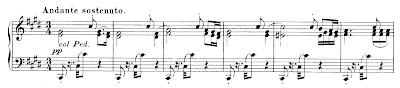
Schubert Sonata D959 Krystian Zimerman artistic research, https://artisticresearchreports.blogspot.be/2017/10/cd-booklets.html
Schubert Sonata D. 959, opening second movement

Schubert Sonata D960 Krystian Zimerman artistic research, https://artisticresearchreports.blogspot.be/2017/10/cd-booklets.html
Schubert Sonata D. 960, opening second movement

There is more to say about that, but I would prefer to return to it in one of my next posts. More interesting for the argument, here, are the fp octaves that characterize the final movement of D.960, for which Zimerman uses the resonance of a staccato articulation captured with the damper pedal.


Schubert Sonata D960 finale Krystian Zimerman artistic research, https://artisticresearchreports.blogspot.be/2017/10/cd-booklets.html
Schubert Sonata D. 960, opening final movement


It is ironic that this CD highlights the extent to which marketing efforts can take the professional dissemination of musical performance into the foggy field of amateurism, where the means are indistinguishable from the ends, while the experimental nature of the recorded artist's practice, exemplary of the value of the scholarly paradigm shift towards including the study of performance, is blatantly neglected. The trajectory that led from Janet Schmalfeldt's 1985 article, On the Relation of Analysis to Performance, to the present day legitimation of musicians as researchers in-and-through their practice, has run parallel to the recording sector's continuous zooming in on the marketability of performers. These roads would offer more interesting directions if they would intersect more often. Why not ask a musicologist to write a few pages about Schubert and his sonatas, and - leaving out some of the pictures - add a text by (or an interview by another pianist with) Zimmerman on what he was looking for when working out his interpretations? It may not always be easy to cater to layman audiences, who may have less of an interest perhaps in the type of issues discussed above, but there is rather exciting terrain to be cultivated. 

As it happens, another new CD arrived on my desk, this week. Again, with some famous early 19th-century solo keyboard sonatas written during a famous composer's late compositional period. 


Tom Beghin, artistic research, Beethoven, late sonatas, Inside the Hearing Machine, https://artisticresearchreports.blogspot.be/2017/10/cd-booklets.html

Beethoven's three last piano sonatas are performed on a replica of the composer's  Broadwood piano, made by Chris Maene and "outfitted with a modern-day interpretation of Beethoven’s hearing machine". The pianist is Tom Beghin, also a musician with projects that I always eagerly await, ever since I discovered him on the box with all 32 Beethoven sonatas played on period instruments (see here). As with Zimerman, I don't agree with everything, or I wouldn't play/record all of it in the same way, but, to name just one aspect of Tom's recording, his improvised ornamentation is nothing short of delicious. Some pictures of his adorn the cover and the inside of the booklet, but there is so much more. Four essays deal with the perspectives of those involved in the project: "Beethoven’s Broadwood, Stein’s Hearing Machine, and a Trilogy of Sonatas", "The Deaf Composer and His Broadwood: A Working Relationship", "The Acoustics of Beethoven’s Hearing Machine", "Recording Beethoven’s Broadwood: A Tonmeister’s Perspective"; bonus materials include "Building the Stein/Broadwood Hearing Machine: A First-hand Report from Beethoven’s Conversation Books" and videos that are available on an accompanying website. All was clearly devised to be enjoyed by experts and laymen alike, and a fine balance was found between the diverse elements of the project as well as between the various demands of marketing a CD and demonstrating artistic creativity.


Friday, April 07, 2017

New professorship


The University of Music and Performing Arts in Graz (KUG) is offering a fulltime professorship in Artistic Research, beginning with the winter semester 2017/18. Minimal monthly salary is €4891,10 brutto.

The call can be found on the university’s Career Service Center website (download the bilingual "Universitätsprofessur für künstlerische Forschung in Musik" PDF here). Details with regards to tasks include management of their artistic doctoral school (currently 11 students), independent research, teaching, setting up an artistic research center, acquiring third party funding, supervision of doctoral and master students, international networking, and admin. A doctoral degree is prerequisite, as is artistic status. Women and persons with special needs will be given preference in the case of equal qualification. Written applications need to be submitted before May 31, 2017.  


This is very exciting, as such openings are still extremely rare. Slowly, EU conservatoires have begun to appoint AR doctores to head their bachelor and master curricula, but at the university level a professorship is still almost exclusively the prerogative of musicologists. Their lack of artistic on-stage expertise – visible in the type of research their departments engage in, as well as in the way their doctoral students approach their topics – is mostly (though not always successfully) compensated for by including an artist in the doctoral supervising team. Moreover, a post-doc problem lies in the fact that without a university position the researchers' options for securing external funding can be severely limited. Between the very large EU grants and the small private trusts there is a huge gap that is best addressed by appealing to national funding agencies, for which typically a university affiliation is required. In terms of output, this problem can be felt in an imbalance of project size.

Kudos to the KUG – may many more such initiatives follow!


Tuesday, March 28, 2017

The Florence Principles


At their latest conference, in a Northern Italian city not far from where the oldest university has seen the start of a process leading to the third third cycle degree in Europe, the European League of the Institutes of the Arts (ELIA) presented their position paper on the doctorate in the arts: The Florence Pinciples. It follows a string of reference documents issued in recent years, each marking an ever firmer grip on doctoral training and therefore AR in  the approximately 280 European institutions that offer research degrees in the arts. With the European University Association's 2005 Salzburg Recommendations on Doctoral Education (and their 2010 and 2016 follow-ups Salzburg II Recommendations and Taking Salzburg Forward), the 2011 European Commission’s Principles for Innovative Doctoral Training, the 2013 European Association for Architectural Education's Charter for Architectural Research, and the AEC's 2015 White Paper on AR (see also here), the institutional community have come full circle in bringing together both matters and formulating their views on them collectively after  years of tentatively coming to terms with the challenges from individual perspectives. 

Besides the typical points of interest, such as appropriate funding, embedding in institutional policy, critical mass, etc., especially noteworthy have been the Salzburg Recomendations' confirmation of advancement of knowledge through original research, the aim at diversity, and recognising pre-docs as early stage researchers; Salzburg II wanting to steer away from the traditional one-on-one supervision model; the European commission adding exposure to industry & other relevant employment sectors; the third Salzburg position's interest in engagement with non-academics; the EAAE expressing the need for specific and inclusive types of communicating knowledge within research and spanning artistic and scholarly projects. Worthwhile adding in this respect is SHARE's Handbook for Artistic Research Education, identifying examples of best practice and offered a Toolkit for curriculum building.


ELIA, Florence Principles, artistic research

According to the Florence Principles, the strategic areas in the international debate include formats for presenting and disseminating output, best practices, supervisors, doctoral programmes, and career perspectives. Some of their "seven points of attention" are deserving of specific attention, indeed. Already in the preamble to the Seven Points, it is striking how artistic aspects seem dominant. To "make an original contribution in their discipline" [my emphasis], "develop artistic competence", "extend artistic competence", "create and share new insights by applying innovative artistic methods" during the doctoral studies leaves plenty of room for the candidates to allow for e.g. a new painting or composition to be the knowledge contribution. What "innovative artistic methods" might be is a mystery to me - they may not be intended to be musical. 

For Career Perspectives, it is envisaged that holders of doctoral degrees in the arts can "enter (or continue) an academic career at a higher education institution and/or enter/continue their careers as artists." In its simplest meaning, this may be taken as the wish for doctores in the arts to continue to do research rather than returning to the stage and the classroom. As valuable as an objective that is, it would be even more exciting if academic positions (i.e. university professorships) become available to artistic researchers so that they may join the pool of researchers that can apply for grants that are limited to university employees.

Under Doctoral Work, it is stated that the project "uses artistic methods and techniques" and that it "consists of original work(s) of art and contains a "discursive component" (note the hesitance to put "written component" in writing) that critically reflects upon the project and documents the research process". Again, this can easily be understood as performing a number of recitals or handing in a newly composed opera, accompanied by an ultimately negligeable written analysis or logbook. More cryptically, it is stated that internationalism, interdisciplinarity and interculturality "can benefit from doc programmes in the arts".

A Research Environment with a critical mass of faculty and doctoral researchers, all of them artistic researchers, is rightfully commended. 

As for Supervision, "at least two supervisors are recommended". It is not explained why and how that function is split, but my guess is that the shortage of artistic researchers with the ius promovendi causes the supervising teams to necessarily consist of a university professor and an artist in order to attain an equilibrium of academic and artistic expertise. 

Finally, the attention point of Dissemination mentions - of course - the need for appropriate channels and peer-review. More interesting, though also not further elaborated upon, is the effort that is stated to be needed in order to "create adequate archives for results of doc work". It is also good to see open access claimed as a guiding principle.

All in all, the historical weight of the visual arts in this discourse is again noticeable, as it has been in the SHARE handbook and elsewhere. Whether the developing committee of the Florence Principles, with one musician among four visual artists, effectively represents the current balance of involved institutional parties is a question that I look forward to seeing treated on its own. Also curious: the European University Association - representing the institutions with the actual degree-awarding power - is not among the interest groups listed as supporting and endorsing this document, even if it takes their own recommendations as a point of departure. Anyhow, it is stimulating to see how the grey literature evolves steadily towards ever more nuanced positions, with ever clearer vision and purpose.


Monday, March 13, 2017

When Brahms met Debussy


I once had a teacher, Claude Coppens, who had meticulously looked for statistical information among the dynamics in the complete known works of Johannes Brahms. His exercise revealed an extraordinarily high number of “mezzo”-dynamics (mp, mf), leading him to conclude that Brahms was to be seen as a representative of German Impressionism.

Other evidence of a deep-seated link between Brahms and Impressionism, this time with one of its more readily known proponents, Claude Debussy, is now available and provides me with an excellent and long awaited opportunity to introduce two of my favorite colleagues: pianist Anna Scott and tenor Valentin Gloor. They collaborated in a unprecedented investigation of two meetings that the older Brahms had with the much younger Debussy in Vienna in 1887. Apart from the regular type of decorative Auseinandersetzung, Anna and Valentin strikingly complete the picture with a stylistic exploration into an alternate version of one of Debussy’s songs and a posthumously reconstructed Brahms fragment, both dedicated to each other. See and listen for Anna’s and Valentin’s findings in this video recording of a remarkable presentation:  


Anna Scott, Brahms, Debussy, artistic research

Anna Scott rose to AR fame with her doctoral work on how to perform Brahms at the piano in a style that is now lost (see here for downloading her dissertation). I found epiphanic pleasure in experiencing the consequences of Anna's research during one of the workshops she has been conducting, when I physically felt the difficulties in learning to adapt my performance style to the discoveries that characterise her project.


Valentin Gloor, Debussy, artistic research

Valentin Gloor is among the Orpheus Institute's best kept secrets. Not only is he one of the very few artistic researchers active in matters of the voice, he also developed his own brand of taking a theatrical angle from which to present his work. It is a real shame that so few videos of his projects are to be found - see here for one more.


Thursday, March 09, 2017

Dead or alive


Any performer active in new music has experienced it when working with living composers: they aren't necessarily the Holy Grail of answers to the questions we may have about their pieces. The previous sentence sounds perhaps odd, as if it is a choice not to work with a dead composer. But we all do want to communicate with the composers of the music we want to play, whether we interpret what they wrote in letters two centuries ago or what they are going to say to us during the dress rehearsal for tomorrow's world première. In other words: it can be as difficult to get the information you want from a living composer as from a dead composer.

This may be one of the reasons that musicology has been mostly interested in the deceased. Other reasons are of course the convenience of a closed oeuvre and of an extensive literature to build upon, but these should be outweighed easily by the advantages of investigating living beings and their actions, one would think. Besides the fundamental urge to assess the act of (co-)creation without the distorting prism of the score, there is the prospect of insights unique to dialogue and common context (e.g. contemporaneity of language, research focus and perspective, knowledge,...). Nevertheless, research into living composers is often not much more than a way to propagate those composers’ ideas. In this regard, Ian Pace’s thorough critique on such spokesman-musicology is certainly valid for quite a few more cases than the one involving Brian Ferneyhough. I remember vividly the awkwardness of seeing David Osmond-Smith read a paper on Berio with the composer sitting next to him, and how nobody knew who to address with a question during the Q&A session. Or how Kagel visibly – dare I say “theatrically” – nodded or shook his head (dis)approvingly during each consecutive presentation at a conference in his honor.


Henry Cowell, artistic research, writing about contemporary artists


It is none the less good to see that recent music is the object of study. It is not a very recent evolution, but there seems to always have been a kind of schism between those who scrutinize long bygone eras and those who look around themselves. The moving wall between them, gradually shifting with time at the speed of about a generation, represents defining lines between interests as well as methods. Already in 1933 Henry Cowell published a book “to present the composer’s own point of view”.* Some of the rationale behind the “experiment unprecedented in musical history” demonstrates a sense of critical perspective, such as the urge to display diversity (“Special consideration was given to composers who are developing indigenous types of music”), or the doing away with any "pretense of being complete”. (Cowell 1933, v) Other aspects betray a level of superficiality, however: while ostentatiously called “a symposium”, there was never a conference and it is reasonable to assume that Cowell oversaw and controlled the whole enterprise himself rather than organize a peer process to work out the content; contributions were sought, and when it was impossible to obtain original ones, articles were reprinted from “various periodicals”. From an academic point of view, there is a thin line between amateurism and journalism.

Interviews are similarly dubious. Since 1969, the Oral History of American Music has been collecting thousands of “voices of the major musical figures of our time” in audio and video interviews. As tempting as these look (and I have not been able to resist them, myself), there is only limited use for them, e.g. to corroborate, negate, or contextualize insights found elsewhere. Investigative journalism never depends on letting the investigated do most of the talking – the interviewer is just another prism. And then there are the multiple issues on the side of the interviewee, not least with regards to purposefully remembering one's own past. (When it comes to wilfully constructing false memories, Cowell has shown himself to be quite skillful.) 

As long as we revere the writings of artists as a product of an oracle, as we so often do their compositions, critical assessment stands little chance. Such issues of “the work” are accompanied by those of power. It is not a coincidence that I added the names of two dead composers to the second paragraph of this text. I could list others – and not just of composers – but I could also name projects of which I had to see the potential vanish into thin air because it became too dangerous to mine the field of knowledge embodied in the mind of the living being who was the object of the study. If I thought myself strong enough to put aside my own ego, that of the other was not so easy to take out of the equation.

Nevertheless, AR can mitigate some of the above concerns. From that perspective, Cowell’s book deserves to be quoted some more, even if his rationale did not include letting composers discuss their own works:

...critical estimates from composers who may not always have a polished literary style but who know their subject, instead of from reviewers who are clever with words but do not know the principles of composition. (Cowell 1933, iii)
...to obtain a synthetic and sympathetic understanding of the aims of any particular composer, why not ask him to relate them himself? He knows more about his aims than anyone else! (Cowell 1933, iii)
Composers who were included had to be persons who could write intelligibly. While literary style is not here the paramount consideration, it must be admitted that some very talented composers have absolutely no ability to set down their ideas in words. (Cowell 1933, iv)
 ...it was expected from the beginning to reveal as much about its authors as it did about their subjects…(Cowell 1933/62, ix)


To be fair, Cowells aims and ideas need to be seen in their historical context (i.e. reacting against a perceived bias in the reception of "modern" music), all the while taking into account his penchant for combining instruction with provocation. Yet, some of it anticipates ideals and conundrums of AR: today, we still recognize the added value in and the issues with an artist contemplating his/her own practice. But the problems of auto-ethnography overlap with those mentioned above, and the intentionality and poetic fallacies are treacherous at any distance between subject and object.


University of Surrey, Conference, Writing about contemporary artists, artistic research

Institute of Advanced Studies, Conference, Writing about contemporary artists, artistic research

These challenges are very typical of AR, as the researcher necessarily involves his/her artistic practice. Through regular such confrontations in my own research, I am thus simultaneously researching (in-and-through that practice, so to speak) possible ways around the pitfalls, whether investigating living composers or performers. And although I am convinced that enough safeguards can be put in place to make scrutiny of living beings’ actions worth its while, I don’t have all the answers to all of the issues. It is therefore very fortunate that an international, multi-disciplinary three-day conference (with Ian Pace on the board of conveners) is planned to discuss just these matters. Writing About Contemporary Artists: Challenges,Practices and Complexities will be held at Surrey University's Institute for Advanced Studies on October 20-22, 2017. The closing date for sending in abstracts is May 29th, 2017.

The proposals are expected to cover a range of different artistic fields, disciplines, musical genres, methodological perspectives, and types of discourse and artist; to focus upon all forms of writing as well as its conventions and boundaries; and – naturally – to focus on living (or recently deceased) artists. A roundtable proposal is encouraged, “exploring questions around the status of creative practice as a form of research in different arts disciplines.”

Many important reasons to be in Surrey in October!


* Cowell, Henry. American Composers on American Music. A Symposium. New York: Frederick Ungar Publishing Co., Inc. 1962 edition. xiv + 226 p.

Sunday, July 17, 2016

CfP: composition as critical practice


For its 10th Research Seminar, "Sound Work", the Orpheus Institute is investigating "composition as critical technical practice". 

Jonathan Impett, artistic researcher

Jonathan Impett


The seminar is convened by composer-performer-researcher Jonathan Impett, and will take pace on 21-23 November 2016, in Ghent, Belgium. At about that time, the last installment of the hot 2015 UK debate on "composition as research" will have been a year old (see here and here for more on that debate). The Orpheus Seminar "will consider composition as a research activity - a process informed by theory and intuition, constraint and contingency, expectation and experience. It is a continuous iterative process of inscription and reflection in which its models, metaphors, aspirations, obligations, tools and technologies all play a part. This process is distributed temporally, socially and materially. The artefacts of composition – however notated, improvised, virtual, embodied or technologically implemented – are hybrid technical objects. Neither pure ‘inspiration’ not unmediated formalism account for what they contribute. We might rather consider composition as a design process, and study its dynamics and decisions in the spirit of critical technical practice – a term coined by Philip Agre in his work on the creation of the artefacts of artificial intelligence."

Keynote speakers are Nicolas Collins (Art Institute of Chicago) and Alan Blackwell (interdisciplinary design - University of Cambridge). The call aims at proposals by practitioners from all disciplines, particularly welcoming "presentations that explore the demonstration of composition as research in innovative ways." The deadline for proposals, to be sent to info@orpheusinstituut.be, is August 17, 2016.

More information can be read here.

Monday, February 29, 2016

A move to put our mark on the Frascati Manual²


A bit over two years ago, I reported (here) on a request by the Society for Artistic Research (SAR) to the Organisation for Economic Co-operation and Development (OECD), calling for a revision of the Frascati Manual in order to add AR as a new and separate scientific category.

The motion was amplified through the European League of Institutes of the Arts (ELIA) proposal, in collaboration with SHARE, two networks that represent some 339 (art) universities and academies, arguing for an “appropriate” status of the arts and arts research. It was put forth that this status should be supported by the recognition of the Arts (and AR with it) as a field of its own: not as part of the Humanities (next to History and Archaeology, Languages and Literature, Philosophy, Ethics and Religion, and “Other” humanities), but on par with Humanities, Natural sciences, Engineering and technology, Medical and Health sciences, Agricultural sciences, and Social sciences. (See here for a letter from ELIA in response to an OECD inquiry, highlighting some of the reasoning.)


Frascati Manual, artistic research, tacit knowledge, embedded knowledge

Last October, the updated manual was published (online readable and freely downloadable here; summary PPT presentation here). From p. 60 onwards, the Frascati Manual goes into the matter under “Examples of R&D, boundaries and exclusions in different areas”:

R&D and artistic creation

          2.64 Design sometimes tends to be characterised by the use of artistic 
          methods. This is another potential area of overlap. In order to address the 
          discussion of R&D and artistic creation, it can be useful to make a 
          distinction between research for the arts, research on the arts and artistic 
          expression.

Research for the arts

2.65 Research for the arts consists in developing goods and services to meet the expressive needs of artists and performers. There are enterprises in this line of business that devote a significant part of their resources to R&D in this area. For instance, they engage in experimental development to produce new electronic musical instruments to suit the needs of a group of performers. Other types of R&D organisations (mainly universities and technical institutes) also play a role in exploring new technologies for performance art (to improve audio/ video quality, for instance). The activity aimed at supporting the introduction of new organisational or marketing methods by art institutions (advertising, financial management, etc.) may qualify as R&D, but caution should be exercised in making this decision. This area of R&D performance is already covered by existing data collection.

Research on the arts (studies about the artistic expression)

2.66 Basic or applied research contributes to most of the studies of the arts (musicology, art history, theatre studies, media studies, literature, etc.). Public research institutions could have a role in selected research domains (as some relevant research infrastructures – like libraries, archives, etc. – are often attached to arts institutions, such as museums, theatres, etc.). As far as preservation and restoration activities are concerned (if not to be included in the group above), it is recommended to identify the providers of such technical services as R&D performers (employing researchers, publishing scientific works, etc.). This area of R&D performance is largely covered by existing data collection.

Artistic expression versus research

2.67 Artistic performance is normally excluded from R&D. Artistic
performances fail the novelty test of R&D as they are looking for a new expression, rather than for new knowledge. Also, the reproducibility criterion (how to transfer the additional knowledge potentially produced) is not met. As a consequence, arts colleges and university arts departments cannot be assumed to perform R&D without additional supporting evidence. The existence of artists attending courses in such institutions is not relevant to the R&D measurement. Higher education institutions have, nevertheless, to be evaluated on a case-by-case basis if they grant a doctoral degree to an artist as a result of artistic performances. The recommendation is to adopt an “institutional” approach and only to take account of artistic practice recognised as R&D by higher education institutions as potential R&D (to be further used by data collectors).


It is clear that the OECD did not follow the reasoning of ELIA, SHARE, and SAR all the way up to the desired consequences: the arts did not get the requested separate status, nor did arts research. In a way, this is not a big deal, I think: the so-called FORD categorization (the Fields Of Research and Development list as reproduced in my previous entry on the matter) serves analysts to statistically understand the dynamics in those fields. One can wonder whether the 1-digit level is crucial. Would it be more advantageous to compare the arts to natural sciences or engineering rather than to history, language, or philosophy? There is also plenty of overlap in different categories, and, most generally, any attempt at structuring such givens may well be futile. The SAR/ELIA/SHARE-move can be understood strategically, though: by considering AR to be in a league of its own, it might support the proponents in visual arts, or in music composition, who argue that the artistic practice is the research, and that the artistic output is the research output. They would certainly benefit from an internationally formalized extra epistemological category, allowing for further alienation from the established academic or academia-oriented (sub-)disciplines and their paradigms.


For the moment, however, this is not happening.

Wednesday, February 10, 2016

Alain Franco's WTK project


On Sunday February 28 (3-7.30pm), pianist Alain Franco will perform his version of Bach’s Das wohltemperierte Klavier at the Pact Zollverein in Essen. Instead of playing the preludes and fugues in the published (chromatic) order, he explores a rationale for experimenting with different sequences. The premise is related to Bradley Lehman's revealing demonstration, as well as - in a way - Bartók's pedagogy-oriented edition (see here), but Alain developed it on an entirely different conceptual basis. I find the idea to be inspiring, with much potential for extrapolation within and outside the art of programming, and thus for AR. Since he didn’t have immediate plans to publish about it, I asked Alain to write something for this blog.


Alain Franco, artistic research, Bach, Das Wohltemperirte Klavier
Alain Franco (© Thomas Plischke)


Extending History


Whenever we take some time to look at the cardinal principle of tonal music we end up with 3 paradigms : 

1. Modulation

2. Time-Space coordinates

3. Discursivity through Orientation.

The 2 books of the Well-Tempered Keyboard by J. S. Bach – published at somewhat 20 years distance (1721 and 1742) – constitute one of the rare examples of both an Encyclopedic and Pedagogic music composition.

One can easily project oneself back into the excitement that followed the speculation of Andreas Werckmeister (1640- 1706) as the one who had succeeded in generating a Unitarian principle of connectivity between all 12-semitones that would be thus called "tempered tuning". This was nothing less than a process of tonal globalization, and it would allow – in the course of the following 2 centuries – the up and coming of increased "lanes of diversification" that would in turn fire up the idea of "extension" from Baroque through Classical and up to late Romantic Esthetics. (The film industry is still intensely benefitting from it).

As the readers of this contribution most probably know, the 2 books of the WTK were published separately and in chromatic order. My idea to reshuffle not only the order of tonalities but also to mix the 2 books as well as the succession of forms (i.e. not keeping the initial binomial pair of a Prelude followed by a Fugue) arose out of a series of thoughts, all somehow bound to one conceptual evidence. Our performance practice has been and remains thoroughly affected by many crossings of influences that cannot be restricted to the sole principle of a "going-and-return" procedure. To me, that means, concretely, that the equation Reading+Playing=Performing is just – literally – "unheard" of.

So, breaking up the Encyclopedic order meant simultaneously to propel the issue of performing into a frame that would reset and reload the necessity of being on stage with it. (But you will notice, later on, that this is not only about a performer’s claim).

The work would thus consist of a dialectic process of the inheritance of substance on the one hand, and a substantial proposal of gift on the other. I could count on some remarkable basics in order to achieve that. First of all, a combinatorial helix of repetition, as all 12 tonalities appear in their major and minor mode, systematically granted a prelude and a fugue, and all this twice through the 2 volumes. I would even go as far as to say that the mobility of material – an idea that I kept as a mantra, all the way through this working process – popped up as a confirmation of what I had gone through in my attempt to forward something I consider, generally speaking, disappointing in performed music formats: the dramaturgy of presence.

Is it perhaps due to my constant and renewed connection to performance art, theater and dance, that I consider stepping on a stage to be stepping in the very center of the "becoming"? I remain convinced that there is no such thing as authenticity – unless it is to adopt an extreme stoic point of view by looking at a printed score for about 2 hours, in total silence, or spend your life in a Library looking for evidences: both conditions are a denial of what performance is about.

The first thing to do was to diffract the full available material. That meant: considering the 96 works (i.e. 48 preludes and 48 fugues) as equally many short-novels, with the idea to turn these into a musical epos. (I even thought of an analogy to opera, since the full performance lasts for about 4 to 4 ½ hours). I knew, of course, that I would remain bound to the specific type of narrativity that all these compositions contain, but that, at the same time, I would be looking at expanding and extending a "theatrical/literary" process in order to create a matching point in regarding the history of stage and the history of music at a comparable level. I had thus no intention to disfigure the material (I am not so fond of the idea that one would step on stage to express "brute anger" on rather weak items such as the condition of the artist, the obsolescence of representation, etc. – specificity of work matters so much more), but rather to associate a "given state" with a "potential" one. I like to think about it as an "inclusive critique".

As we know that, in tonal music cadences, territoriality and "coming home" are key concepts, I decided to associate (although it was not only about deciding or wanting: I just felt, at some point, that there was something evidently valid in proceeding this way) these with their own projection in History, according to the adage that "every generation thinks the next one".

The cadence is a principle of built-up in order to complete a sequence, granting it something like constitutional characteristics. Territoriality on the other hand results from comparative locations with regards to the main tonality, and the concept of "coming home" – a.k.a. the last cadence – is granting the full journey its completeness and confirmative dimension. As such, we could even agree that these paradigms meet somewhat the Lutheran spirit of work and investment, and that, frankly, there is not much more to add.

That is correct, but not to its full extent.

Performing – whether music, a theater play, or even curating an art exhibition – is a displacement of materials, of forms and formats, and as such an interrogation addressed to the performer’s community – pretty much like paraphrasing one of Madonna’s titles: "justify your Love".

I thus associated ideas inherent to the published material with ideas that I considered relevant to its performative perspective. (Note that I make a distinction between the two – which I even believe could be extended to other musical formats, and opera in particular, with the following assumption: if you consider the score as an invariant, which is the "Sacred Rule" in the institution, the staging remains of course of a second order. But that’s another story.)

For obvious dramatic reasons, e.g. harmonic proximity, elasticity, resistance, the tonal discursivity established that, the further you modulate from a given tonality, the more parsimoniously one must use that ability in order to avoid "exhausting" territoriality.(1)

We know what this means: modulations to the 5th and the 4th degree (the circle of fifths turning left or right) keep the highest index of proximity with the principal tonality; the minor second and the tritone are at the other extreme of that topology as the most "alien" ones. As you will witness in the playing order, printed below, I indeed reproduced these characteristics on a meta-level to the full cycle. (By the way, this is one of the generic ideas I tend to pursue in my work as "music dramaturg": the continuity of History through the editing of material, and, as such, the continuity of Material by other means.)

For instance: the first part starts with a B flat minor prelude and finishes with an E major Fugue, which sets a tritone modulation, but one that is projected over a good 2 hours of music. At the end of the second part, the only "direct" modulation to the tritone is taking place (A major – E flat minor), which, at that moment, functions indeed as the "dramatic" cadence of the complete material, reproducing again on a larger level what we do notice as a classical standard. Basically, all possible modulations were used – similar to the famous series in Berg’s Lyric Suite of  "integral intervals": minor second, major second, minor third, major third, fourth, tritone, fifth, including the somewhat Schubertian "Moll-Dur" modulation. (See for instance the repeated spots on A flat major and minor in the first part).

But, with all this, the key question remains: how did this particular (new) order emerge? I must say that this has been a progressive process, with at the beginning "local" decisions on short edits, trying to match textures and surfaces – eventually rethinking speed and articulation in function of what these could produce in terms of congregations and proximities. For those of the readers who are acquainted with the scores, it will speak for itself that some of these do point at and contain Gothic harmonies (5-part fugue in C sharp minor), Classic Enlightenment style (prelude in D major), "speculative" counterpoint (fugue in B flat minor), etc. In the course of a long tradition of rhetoric and agogic, I remained attentive to, for instance, the "breathing in and out" of the longer sequences. At some point, I decided to transgress the symbolism of the double bar by starting to connect preludes and/or fugues without stops, remaining in one tonality for a while in order to induce yet another sensation of tonal duration, and by doing so suggesting another view on Classical frames, indeed producing another view on framing altogether. 

The performers among us will certainly recall "body-memories" of energy flow and long-term breathing when it comes to designing a big arch that will eventually feed the attempt of grasping a whole prelude or fugue in a few giant paces. Well, it occurred to me that, at certain conditions (but thinking about conditions that are required to achieve specific goals regarding performance seems to me essential), the final cadence, i.e. chord, would contain enough resilience that I would, for instance, use that remaining energy of a closing gesture as an upbeat for an opening one. I remember having thought of the recitativo-aria module, where there is no such thing as a clear, unambiguous end, but rather a "potlatch" of giving-receiving material  to carry on with. If you’re looking for a famous example of the matter – and not at all connected to Bach – just watch the opening scene (again) of Stanley Kubrick’s 2001, A Space Odyssey. It ends with the beginning of Richard Strauss’s Also sprach Zarathustra, one of the strongest cadential progression ever written, and yet, just to say: "you know, and this is just a beginning"…

It was by inquiring further into building this meta-level of harmony, tonality and form, that I had the feeling I was increasingly more busy with the idea of "staging" the material than thinking of "playing" it. If you take a close look at the current playing order (which I never regard as final), you will notice that there is an idea of tonal regions that might not be instantly noticed while listening, yet "doing something" on a level I’d like to consider Urban. For instance: the tonalities of F and A (major and minor) do not appear in the first part, whereas F sharp and C sharp are absent in the second (on the noticeable exception of the prelude in F sharp major). Now, as I am starting and finishing the cycle with the B flat minor prelude (which I chose for its association with a "walking pace" – and consequently played at approx. 60 for a crotchet), the tonality of E flat is following/preceding it in the conventional way, as if it were about "leaving the church in the middle of the village". But, if the beginning is clearly set on "reasonable" modulations (B flat – E flat – H major – E major – etc., i.e. fifths in sequential pairs), at the very end we are in a rather "blurred" situation, going from F sharp major to A, then via F back to A. At that point, the "break-up" A major – E flat minor is reinforced by the rather high speed of the fugue in A (which I play at about 110 for a dotted crotched), as well as emphasizing the binary/ternary beat. The last chord of that fugue is cut abruptly, followed by the E flat and B flat (i.e. D sharp and A sharp), which I leave to resonate as if these were the brass players in Siegfried’s death.    

This extended oscillation of time and duration – clearly exceeding the reasonable Time concepts of Bach – was, for me, somehow the conceptual key to the "interface" between score and performance, which I even decided to emphasize by having the audience seated around the instrument – the chairs being placed almost as if these would reproduce the shape of the grand piano. (The picture below shows the empty space during the tuning session).

       
Alain Franco, artistic research, Bach, Das Wohltemperirte Klavier


The idea is clear, I guess: this was not solely about listening but about sharing the full experience of "being there" as well – maybe even to point out the evidence that there is only this one World, whereas believers keep saying that… But this is another story, and yet not completely other.

It seems that we have come to understand the importance of staging (and going on stage) as the most appropriate way to "compose" the ongoing stories we do keep working with. This matches by the way Nietzsche’s concept of "Ewige Wiederkehr des Gleichen" (the Eternal Return of the Same). However, I wouldn’t know why, on the one hand, we would consider the basic issue of performing being about staging material, and as such "displace and replace" it, while on the other hand we would consider that music – Time Art in its very essence – would be kept away from this key issue, wrapped up in its own printed appearance, precisely when it comes to recompose Time with already composed time.

This project is just one out of infinite attempts to do so.


Alain Franco, artistic research, Bach, Das Wohltemperirte Klavier


(1) This is precisely what Schoenberg pointed at when he assumed that the tonal system became indeed "exhausted". He meant, in the first place, a loss of specificity due to an esthetic of "constant torment", on the verge of merging Esthetic and Art. But it’s precisely in the course of this movement that performance became associated with creativity, that a keyboard player would consider himself an artist…